How to choose a CPMS for your EV charging network
A practical CPMS buyer’s guide covering OCPP compatibility, operations, billing, energy control, integrations, migration and total cost.

Start with the network you need to operate
A charge point management system (CPMS) can monitor chargers, manage users, apply tariffs and connect charging data to the operator’s other systems. Choose it around the operating model, not the longest feature list. Lists are easy. Running the network is the test.
Define charger types, markets, users, payment methods, support hours, reporting duties and energy constraints. Separate launch requirements from possible future services. A platform built for public rapid charging may be a poor fit for home reimbursement or shared residential sites, even if both are called a CPMS.
Test the exact charger and OCPP implementation
Confirm the live OCPP version and functions supported by the CPMS, charger and firmware. Check formal certificates through the Open Charge Alliance programme, then test the pairing. Certification cuts uncertainty; the pilot must still cover the functions your network needs.
Map the connection path. Does the charger connect directly to the CPMS or through a manufacturer cloud? Who controls OCPP credentials, SIMs, certificates and firmware? Check what continues locally during a connection failure, including authorisation, active sessions and stored transaction data.
What EV charging management software actually does
Make the operations team use it
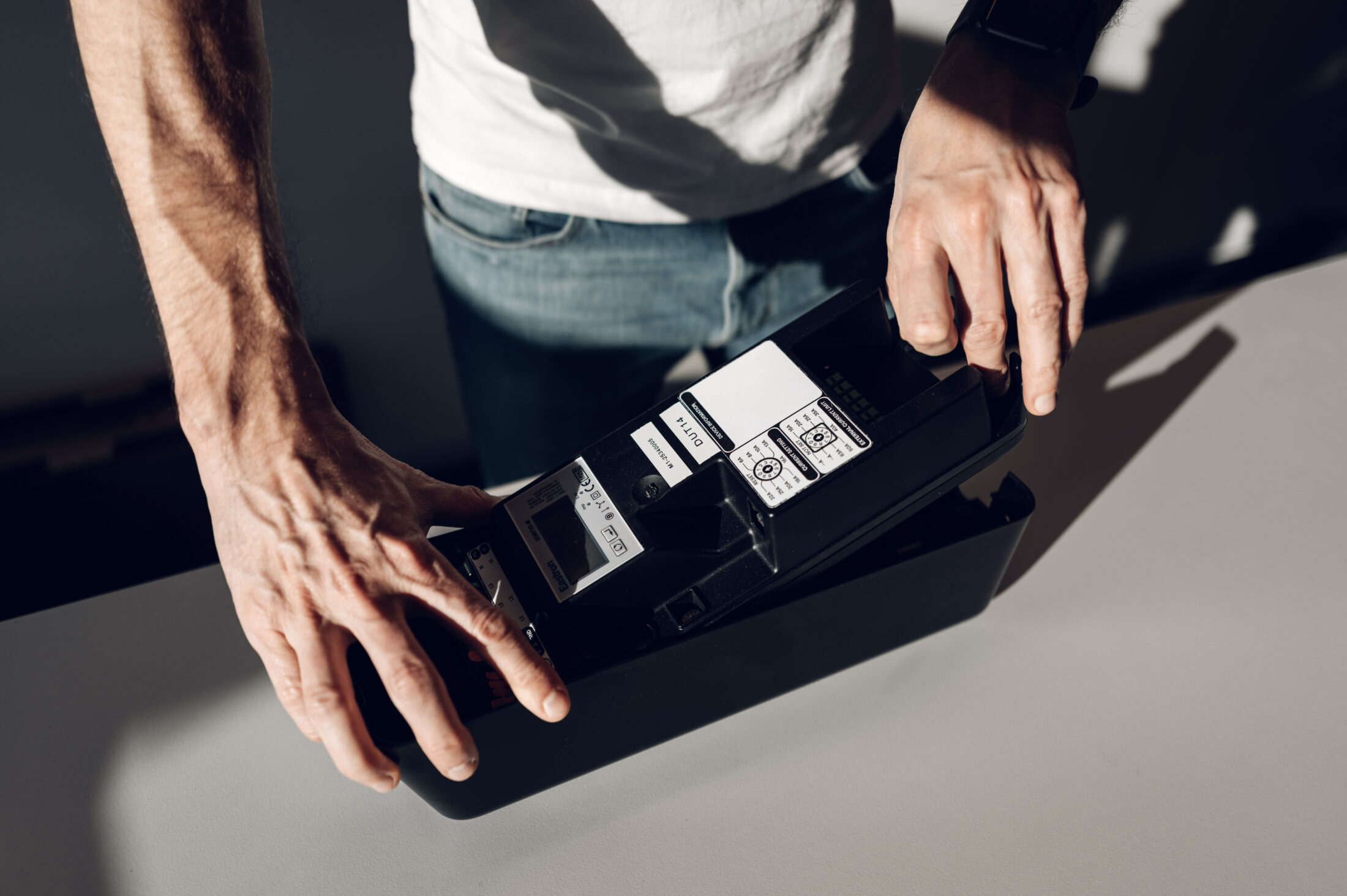
Give support staff real tasks during the trial: find an intermittent charger, inspect its message history, restart it, change a setting and collect evidence for a customer case. A polished dashboard matters less than whether an operator can find the fault and decide what happens next.
Follow a session from access to settlement
Test RFID, app and other required authorisation methods from start to finish. Check meter records, tariffs, VAT, payment failures, refunds, reimbursement and charge-detail exports. Decide which system creates invoices and who reconciles missing or disputed sessions. Check legal metrology in every market where energy is billed.
Decide where energy control belongs
A CPMS may send schedules or limits, but site control can also sit in the charger, a local controller, an energy-management system or a specialist service. Name the component making each decision and what must work offline. “Smart charging included” is not an architecture.
Inspect integrations and data access
List the systems needed now and later: payments, roaming, accounting, CRM, fleet tools, energy services and data warehouses. Review APIs, permissions, webhooks, rate limits, test environments and retention. Confirm that operational and transaction data can be exported in a usable format.
Plan the exit before signing
Ask how chargers would move to another backend, and how credentials, users, tariffs, sessions and audit logs would follow. The Open Charge Alliance recommends testing every charger model and firmware before a CSMS migration. A credible supplier can explain the process, responsibilities and fees before signature.
Price the whole operating model
Compare licence and transaction charges with onboarding, payments, roaming, support, retention and migration costs. Add the labour needed to resolve faults and reconcile sessions. Cheap software is not cheap if routine cases require manual work or site visits.
Run a representative pilot
Use production firmware, real connectivity and the intended integrations. Test successful sessions, failures, offline behaviour, updates and recovery. Record acceptance criteria and owners for fixes. The result should prove that charger, CPMS and operating process work together.
How amina fits
amina supplies focused charging hardware and works with specialist software partners. amina C/C2 and amina M/M2 use local OCPP 1.6J for CPMS connections; C2 and M2 are hardware-ready for OCPP 2.0.1. Hardware readiness does not make every 2.0.1 function active in a given firmware and backend pairing.
This keeps software choice with the operator, while compatibility still has to be proven. Check the current integration partners and test the intended combination before rollout.
Related