It looks like an iPhone. That was the easy part.
Denmark’s largest integrated energy and telco company spent the better part of two years choosing a home charger, and waited for one that did not yet exist when the conversations began. This is what it was holding out for.
The one behind glass
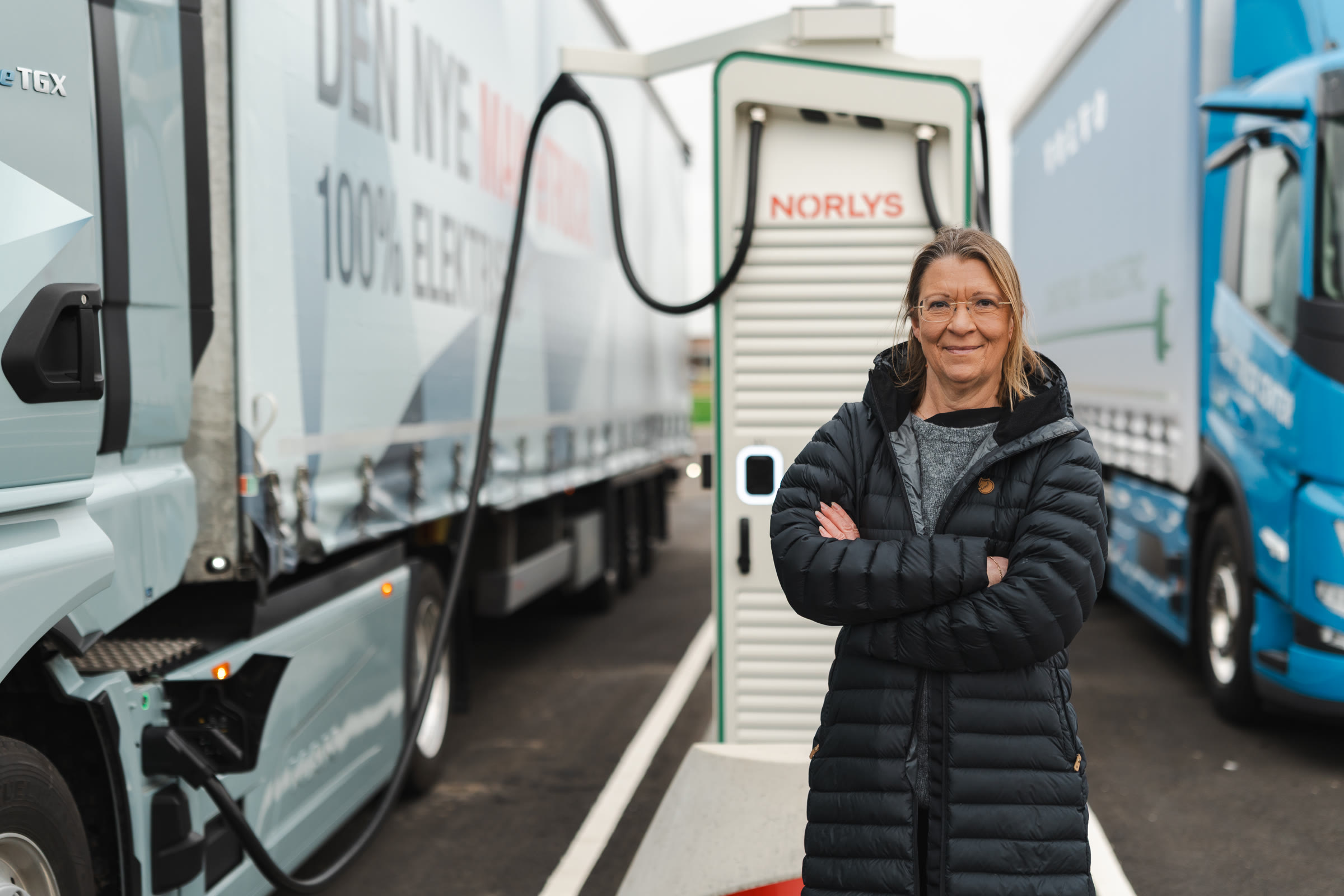
At a trade show in Copenhagen, on a floor full of the usual bulky boxes, one charger sat behind glass. You could look at it, but you were not allowed to touch it. amina had decided to display a wall-mounted AC charger the way a gallery displays a small sculpture, on a plinth, roped off, lit from above. It should have looked absurd. It did not.
Ellen Trolle and Philip Aude Skeldrup both stopped at that stand. The two of them ran eMobility at Norlys, and what stopped them was how the charger looked. What kept them there, and what eventually put the Norlys name on it, is the part the looks do not tell you.
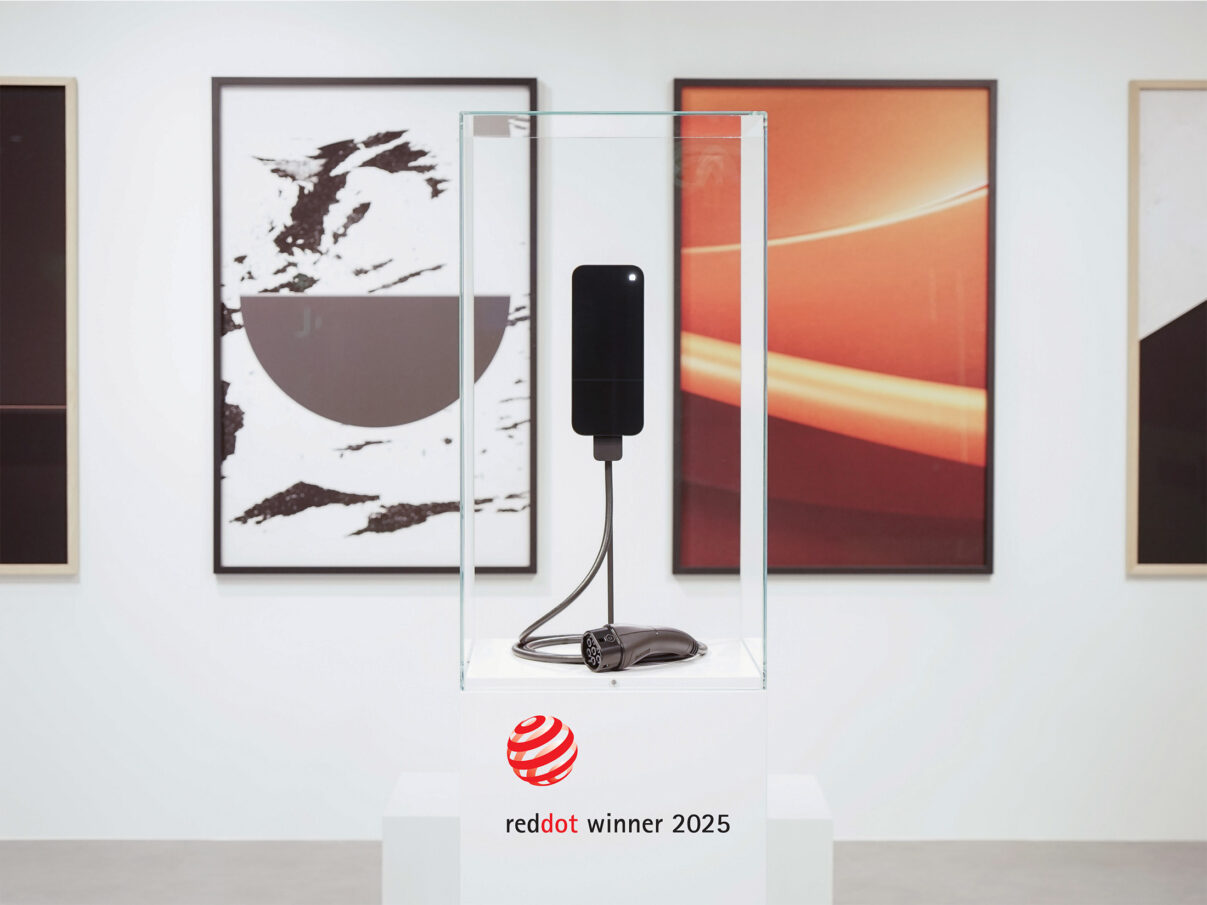
Start with who Norlys is, because the scale matters. It is Denmark’s largest integrated energy and telco group, and it is a cooperative, owned by more than 800,000 of its own customers. When Philip talks about all the parts that need to be cleared, he is careful not to romanticise it. “It is built into our DNA, for sure. We are aware of our ownership in everything we do,” he said. “But ultimately what we are driving is a commercial business.” The cooperative ownership does not get you a softer decision. If anything, it makes getting it wrong more visible.
Not something done with the left hand
eMobility at Norlys did not begin as a grand plan. It began, in Ellen’s words, as a defensive move: sell home chargers so that customers who bought an electric car did not wander off to a competitor for their energy. She decided fairly quickly that this would not do. “I said, this cannot live like something we do with our left hand. We need to build a business around this.” From the start of 2023 she did exactly that, recruiting a management team almost entirely from outside the charging industry, on purpose, so that the business would be built the way Norlys wanted rather than the way everyone else already did it. Philip came in a few months later to run the commercial side. The product and business development team has gone from five people to twenty-five, and it is still growing.
So this was not a small purchasing decision. Switching the charger that goes on the wall of a Danish home is, as Philip puts it, “a large project for us.” Commercial, technical and cybersecurity teams were involved, the last of those because a national energy company treats security as non-negotiable. Installation partners had to weigh in on how long each unit takes to fit. Even the warehouse had a say. From the first conversation to the first order took close to two years.
Why do they need to be this size?
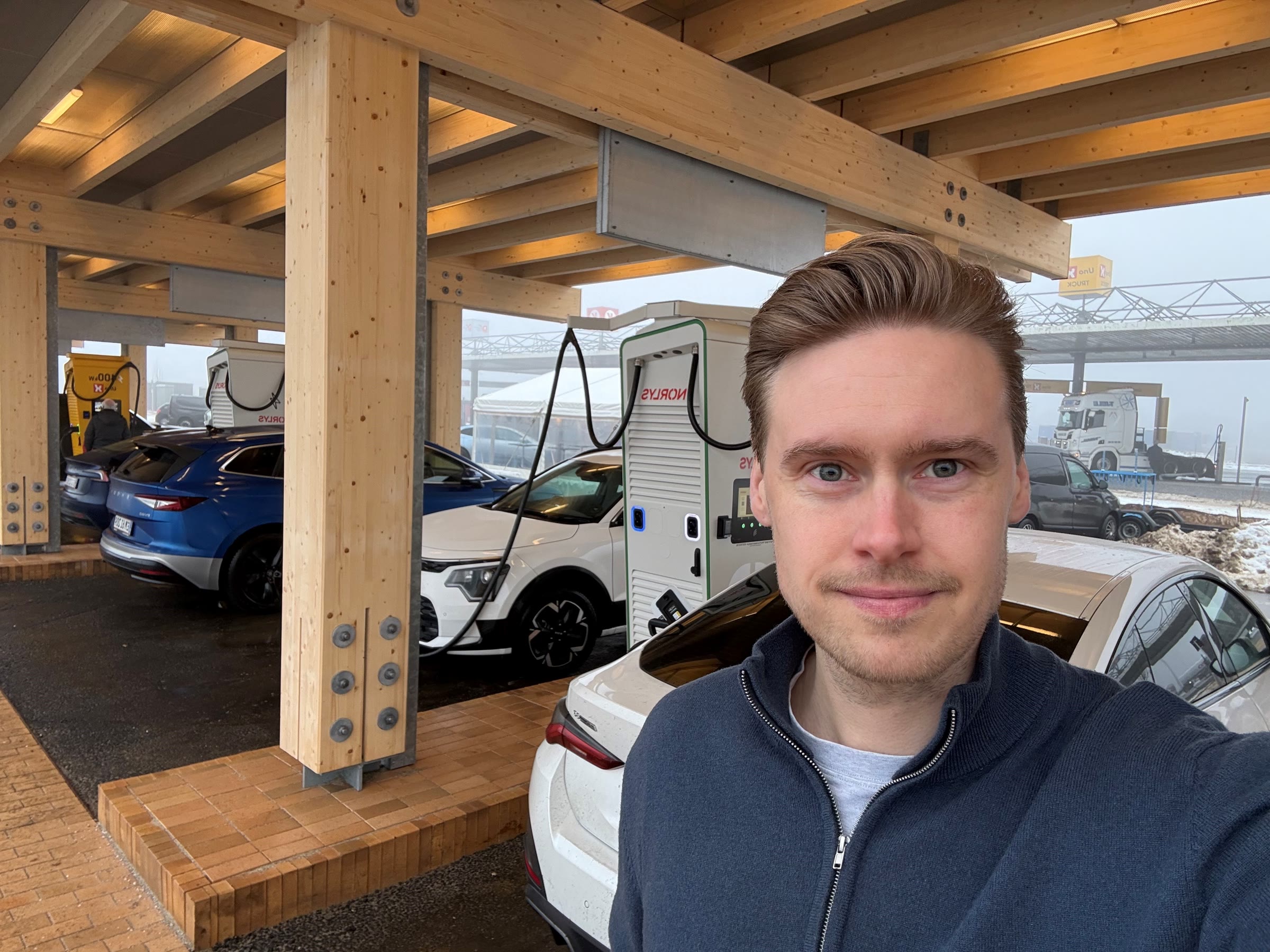
The relationship started earlier, and quietly, and it started with Ellen. Before Norlys she ran roadside assistance across Denmark, Norway, Sweden and Finland, heading the SOS International division responsible for all four. In the later years of that job the work had drifted towards connected cars, and somewhere in it she crossed paths with Rasmus Brandt Pedersen, then at Connected Cars, part of the Semler group. Years on, Rasmus was at amina. He picked up the phone, reached Ellen, and Ellen passed the dialogue to Philip on the commercial side. They liked what they heard about the product over the phone. The Copenhagen stand was where they finally saw it in the flesh, and where the size and the design landed properly. “All the AC chargers at that point were bulky and large,” Philip said. “It is not that advanced, what is inside them. We were puzzled. Why do they need to be this size?”
Ellen’s verdict on the one that was not bulky has since become a catchphrase inside Norlys.
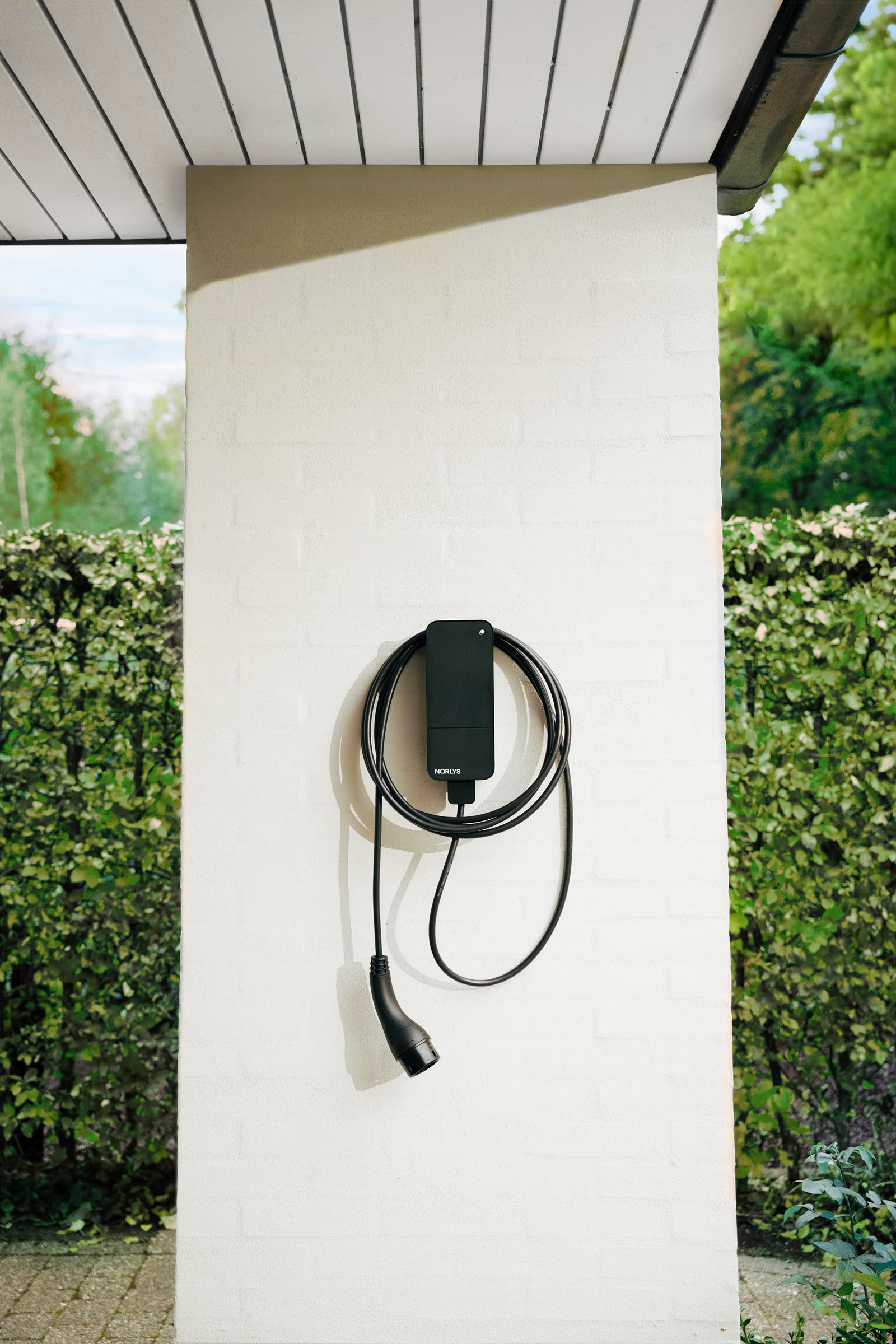
“It looks like an iPhone turned into a home charger,” she said.
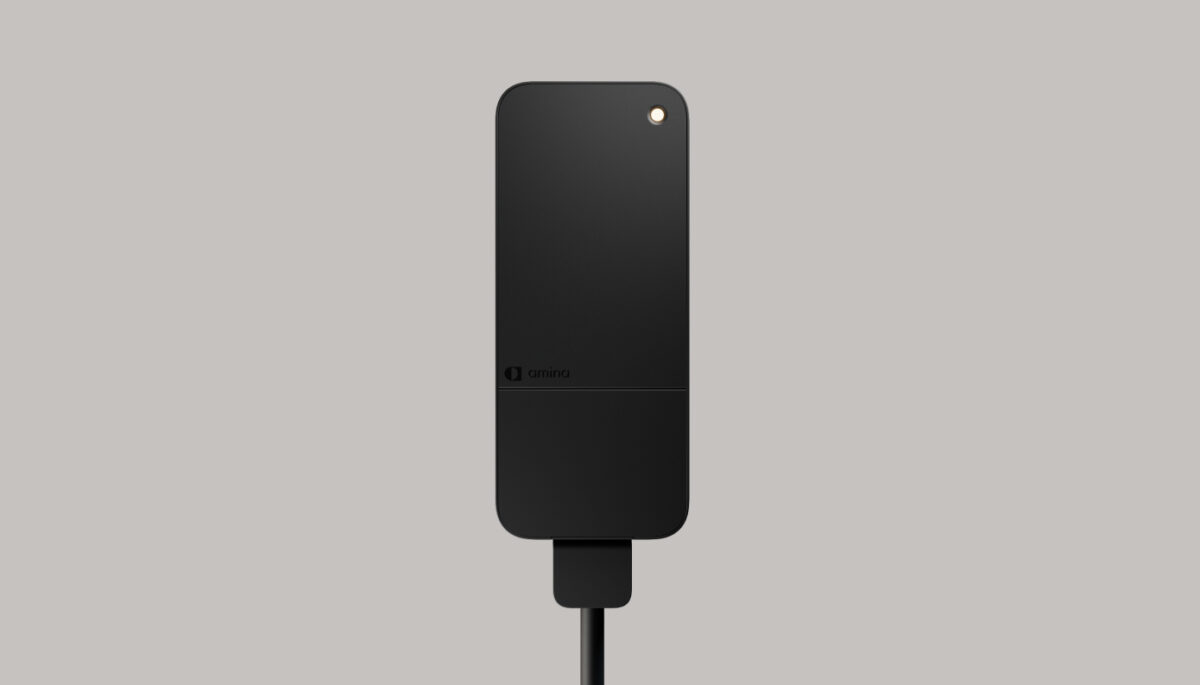
None of that was an accident. amina’s small, quiet form was the point. Since a charger usually lives on a wall outside the house, a homeowner needs to like the look of it, so the brief was to design something that does not shout. The front actually fits inside a sheet of A4 paper, which was part of the reason it won a Red Dot Design Award in 2025.
A calculated risk
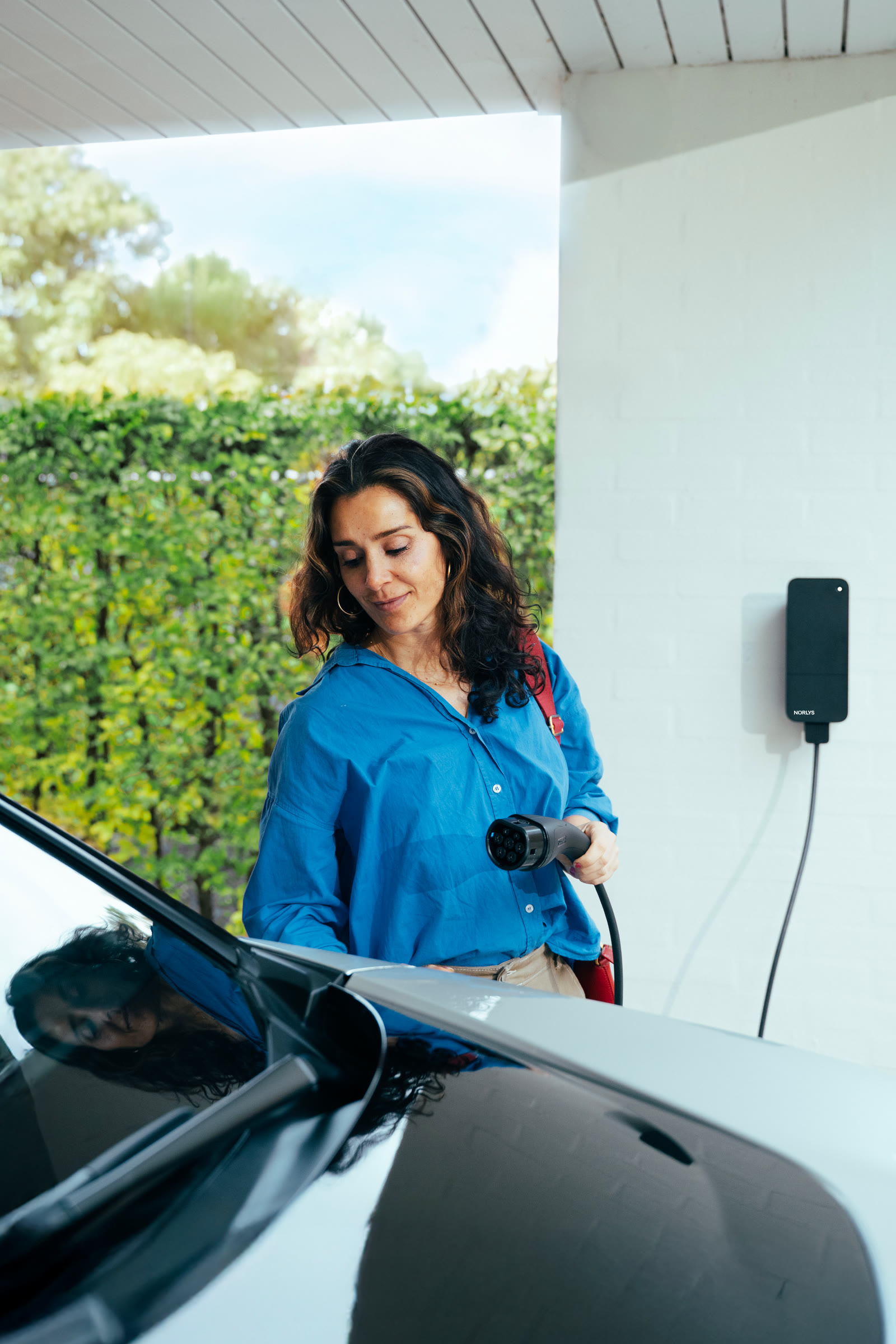
But Philip’s team works to a short list of things it will not compromise on, and aesthetics are not on it. OCPP native is. “We need to be in control of the connectivity, full stop,” he said. As a telco company, Norlys also wanted its own embedded SIM in the charger, running on its own network. It wanted commercials that worked for both sides. And it wanted a charger its installers could fit quickly, because installation time is one of the heaviest costs in the whole operation. On that count the amina charger delivered: by their account the unit goes up in under five minutes, comfortably quicker than the boxes it replaced used to take.
There was a catch, and it was a real one. When the conversations started, the product variant Norlys finally chose – amina C – did not yet exist as an approved, serial-production product. Norlys was being asked to bet on a charger it could not buy, from a manufacturer it had not worked with, and to wait. So it waited, with periodic check-ins, for the better part of two years.
“It was a bold move,” Ellen admits. “We are extremely dependent on the quality being fine, and on being able to scale.” They did it anyway. “We went with our stomach feeling and took a calculated risk,” Philip said. “We believed in the company, we believed in the dialogue with Rasmus, and then we made the decision.” Norlys had backed an immature partner before, with Monta, early in Monta’s journey, and that bet had paid off. They made the same kind of call again.
Norlys chose the amina C variant
A few months of data look promising
So far, it is holding. The first units went up at the start of the year, so this is early, a few months of data rather than a verdict, and both Ellen and Philip say as much without prompting. The early read, though, is good. Uptime is running at around 99 per cent. “We haven’t received any negative customer feedback on the box,” Philip said. “A very positive uptime compared to the rest of our installed base.” Ellen’s measure is simpler. “Once the decision is made, I only hear about it if there are problems. And I haven’t heard about it.”
The moment that stuck with Philip was not a spreadsheet. It was seeing the charger with Norlys’s own branding on it for the first time, ready for production. Norlys designed the whitelabel treatment themselves, discreet, no oversized logo, and sent it across. The detail amina’s team enjoyed most: Norlys had placed its branding in a spot on the charger that amina had not thought of using. The Danes, predictably, have a good eye.
A very positive uptime compared to the rest of our installed base.Philip Aude Skeldrup, Senior Director of eMobility Products & Business Development @ Norlys
Be the iPhone, not the iOSEllen Trolle, Senior Vice President of Energy @ Norlys
Both have new roles since we spoke. Ellen has been appointed Senior Vice President of Energy at Norlys, taking responsibility for the energy business. Philip now runs eMobility products and business development.
Ask both of them where this goes next and the answer is not really about a charger at all. Philip wants a socket version, a business portfolio, and a partner to co-develop the next steps with, vehicle-to-grid included, rather than a supplier to place orders with. He is clear that the cleverness should sit in the software, not the hardware. “Stick to your lane. The brain should be with the charge point management system, not the charger.” Ellen, naturally, has the tidier version.
“Be the iPhone,” she said. “Not the iOS.”
Which, given where this started, seems about right.
Related