The charger works. The signal does not.
Plenty of EV chargers fail in the same spot: the basement, where there is no mobile signal to run them on. amina has started working with Nextivity, Tura Scandinavia and the Charge Point Operators Laddel and Current to sort charging and coverage as one job rather than four.

Why chargers fail where there is no signal
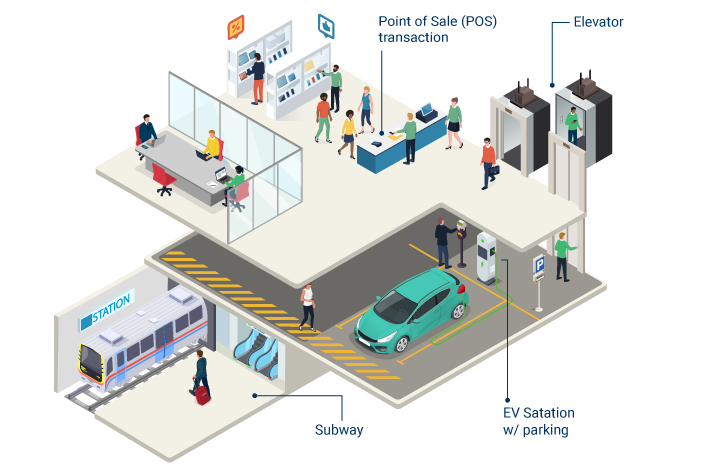
Most modern EV chargers are only as good as their connection. They run on OCPP, the open protocol that lets a charger talk to the software managing it. OCPP needs a network. A network needs signal. And signal, in a multi-storey concrete car park or a basement store, is often the one thing missing.
A charger with no connection can usually still deliver power. What it cannot do is report a session, apply a tariff, bill the right resident, or be sorted without someone driving out to it. For a house with its own router, this rarely comes up. For a block of flats or a commercial building, it comes up constantly.
What the partnership puts together
amina has started working with four companies to close that gap. Nextivity supply CEL-FI, an indoor mobile coverage system approved by the mobile networks and built to be network-safe, carrying 4G and 5G into the parts of a building where signal normally gives up. Tura Scandinavia handle distribution, local presence and the technical side of getting equipment specified and installed. The Charge Point Operators Laddel & Current run project execution, so the work actually lands on site. amina supply the chargers.
The point is not four logos on a slide. It is that a property owner can get charging and coverage as a single job, from parties who have agreed how the pieces fit, rather than four separate contracts and a round of finger-pointing the first time something drops off the network.
Charging and mobile coverage get sold as two problems. On a real building they are one.Ole Martin Dahl, Chief Operating Officer at amina
Indoor mobile coverage, designed in rather than bolted on
This is an informal partnership for now, and deliberately so. The problem behind it is not informal at all. A building is increasingly asked to add EV charging at the same time as residents expect a phone that works in the garage, and the two have long been handled by separate trades who rarely spoke. Sorting them together, from the start, is simply the sensible order to do it in.
Related