ERE Certification EV Charger: Everything You Need to Know (2026)
From 1 January 2026, Dutch legislation changed in a way that directly affects anyone who owns, installs, or manages an EV charger. The new ERE system means your charge point can generate revenue, but only if the hardware is MID-certified. Here is what you need to know, and how the amina M fits in.
What is ERE certification for EV chargers in the Netherlands?
ERE stands for emissiereductie-eenheid, an Emission Reduction Unit. It is a digital certificate registered with the Nederlandse Emissieautoriteit (NEa) that proves how much CO2 was avoided through electric charging. One ERE represents one kilogram of avoided CO2.
The system replaced HBE (Hernieuwbare Brandstofeenheden) on 1 January 2026. The principle is straightforward: fuel suppliers selling petrol and diesel in the Netherlands must offset a growing share of their emissions each year. They do this by buying ERE certificates from EV charger owners. The polluter pays. The person providing clean energy gets paid. It is not a subsidy, it is a market.
The scheme received final approval from the Eerste Kamer at the end of March 2026 and applies retroactively from 1 January 2026, so charging sessions from the start of the year count.
One hard requirement: your charger must have an inbuilt MID-certified meter. MID stands for Measuring Instruments Directive, a European standard for energy measurement accuracy. The meter must sit in the charger itself. For private charge points, a separate meter in the fuse box does not qualify.
Does the amina M qualify for ERE certification?
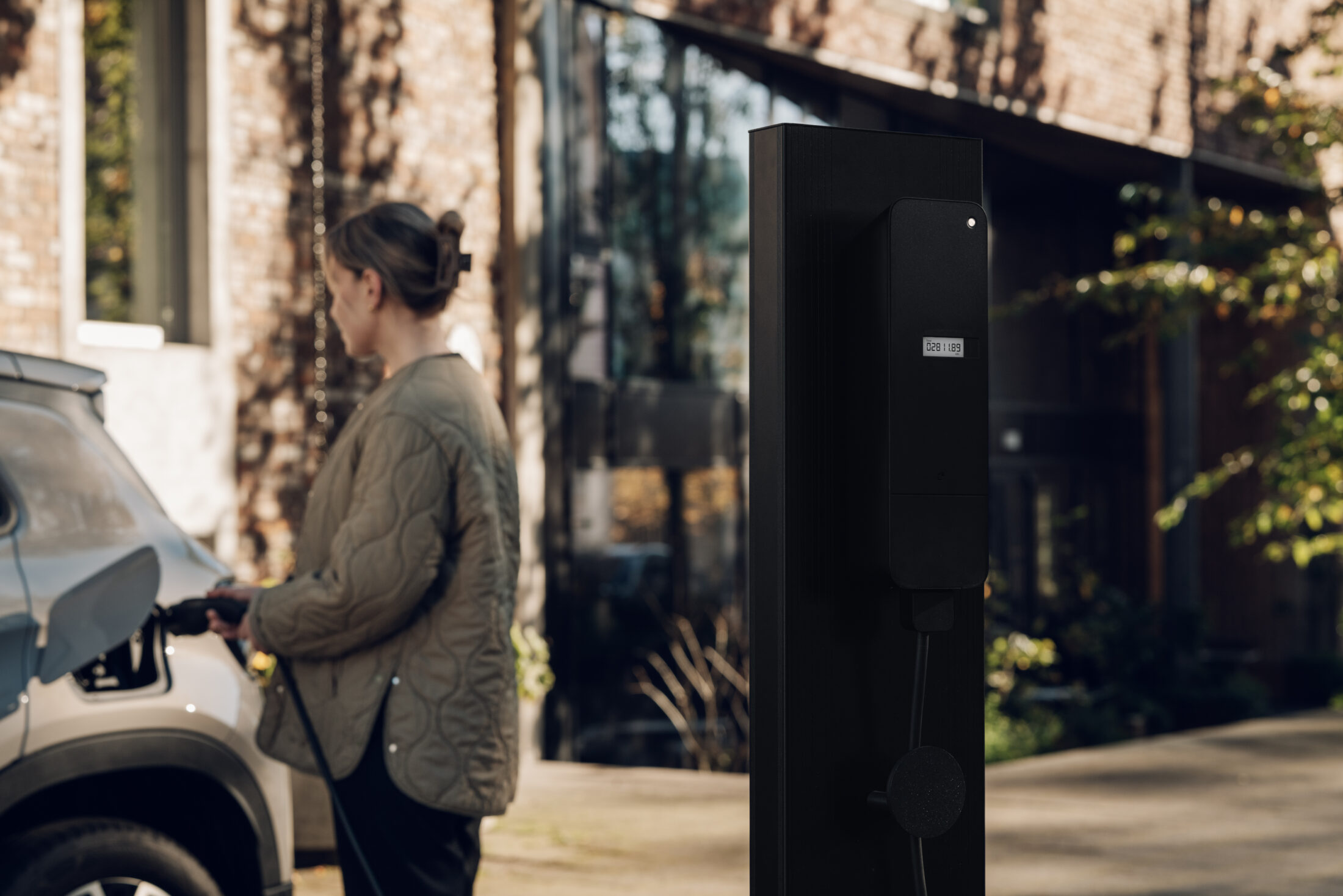
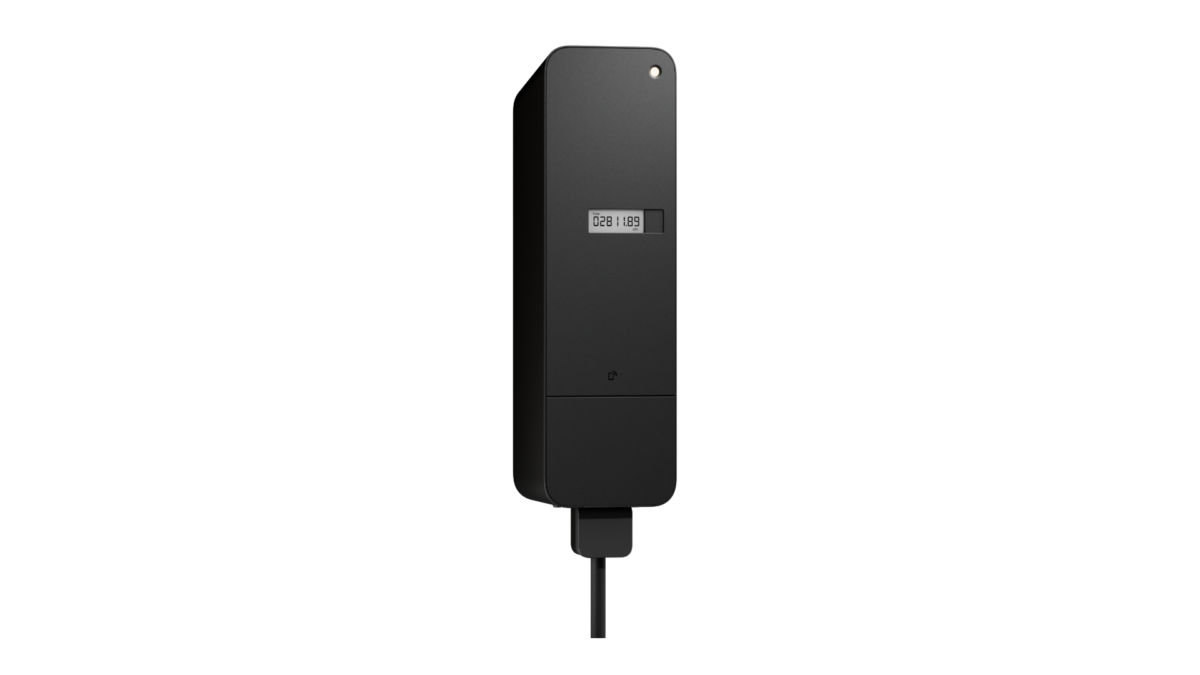
Yes. The amina M has a built-in MID-certified meter and meets every technical requirement for ERE registration in the Netherlands.
At ere-registratie.nl, the inboekdienstverlener amina works with, amina is listed as a manufacturer. The product entry to look for is the Alva Max, the amina M as sold by our Dutch partner Alva Charging. If you have an Alva Max, select it from the product list. If your charger carries the amina name, select “Other” under product type and type “amina” in the text field. Everything else in the process works normally.
MID certified EV charger – ready for revenue generation
Frequently asked questions: ERE certification and the amina M
What is the difference between ERE and HBE?
HBE ran until the end of 2025. ERE took over on 1 January 2026. The technical shift matters: HBE measured energy content in gigajoules, ERE measures actual CO2 reduction. For pure electric charging that is a better deal, since no combustion means a cleaner calculation. The legal basis is the European RED III directive, implemented in the Dutch Besluit energie vervoer. ERE also opened the scheme to home chargers and smaller businesses. Under HBE, participation was in practice limited to large-scale operators.
Who can register for ERE certificates?
Since January 2026, participation is open to homeowners with a charger on their property, businesses with chargers at their premises, fleet managers with chargers at depot or leased sites, CPOs managing public or semi-public charge points, and VvEs with shared charging facilities.
The requirement in every case: a charger with an inbuilt MID meter, registered via an inboekdienstverlener.
What is an inboekdienstverlener?
An inboekdienstverlener is a booking service provider that registers your charging data with the Dutch Emissions Authority on your behalf. Only parties that book at least 2 million kWh a year can register directly with the NEa. Everyone below that threshold, which includes every household, goes through an inboekdienstverlener. They handle the paperwork, sell your certificates to fuel suppliers, and pay you the proceeds minus a service fee, typically somewhere between 10 and 30 percent. You can only use one inboekdienstverlener per electricity connection, no double-dipping. The NEa publishes a list of registered inboekdienstverleners; check it when comparing providers.
How much can you earn from ERE certificates?
Market indications through the first half of 2026 put the payout at roughly 7 to 14 cents per charged kWh before the service fee, with around 10 cents a commonly cited midpoint. A driver doing 20,000 kilometres a year and charging mostly at home uses roughly 3,500 to 4,000 kWh annually. At the midpoint that works out to about 350 to 400 euros per charger per year. A business with 20 chargers is looking at 7,000 to 8,000 euros annually before fees.
The mechanics behind those numbers: for grid electricity in 2026, every charged kWh converts to roughly 0.33 ERE, using the fixed national renewable share of 50.5 percent, and EREs traded around 30 cents each in early 2026. For private home charging that fixed share applies regardless of your own energy contract, so solar panels do not increase the payout for individuals. Businesses that can document fully renewable supply can roughly double the ERE volume per kWh.
The price moves with supply and demand. The direction of demand is upward: the transition obligation on fuel suppliers rises from 14.4 percent in 2026 to 28.4 percent in 2030, which means they need more certificates every year.
Does the amina M support automatic data reporting?
Yes. The amina M connects to a back-office via OCPP, enabling automatic transfer of charging session data to your inboekdienstverlener. No manual exports, no annual spreadsheet uploads. Automatic reporting also makes interim payouts possible with some providers, rather than waiting for the annual settlement after the registration year closes.
Who owns the ERE certificates: the charger owner or the building owner?
Under the Besluit energie vervoer, the rules that sit under the Wet milieubeheer, certificates belong to whoever holds the electricity connection at that address, as recorded by the EAN registration in the Centraal Aansluitingenregister. Own the building with the grid connection in your name, and the certificates are yours. Leasing premises where the landlord holds the connection is worth a conversation before you register, because legally the certificates may be theirs. For employees charging a company lease car at home: the employee owns the certificates. Not the employer. Even if the employer bought the charger and pays the electricity bill.
What data do you need to provide for ERE registration?
At registration you will typically need the charger make and model (Alva Max owners select the Alva Max; for a charger carrying the amina name, select “Other” and type “amina”), the installation address, MID meter serial number or certification confirmation, back-office system details if connected, a KVK extract for business registrations, and your IBAN for payment.
After that, provide a kWh overview: automatically via back-office, or manually by uploading a session export.
Is there any cost to register?
No upfront fee from reputable inboekdienstverleners. They take a percentage of what they earn for you. If nothing is successfully registered and sold, you owe nothing.
Can a VvE charger qualify?
Yes. The ERE scheme covers MID-certified chargers at any valid address, including shared residential buildings, provided the VvE holds the electricity connection the charge points sit on. The complication with VvEs is that shared grid connections can muddy who legally holds the right to the certificates. Most inboekdienstverleners have VvE-specific solutions. amina has considerable experience with VvE charging infrastructure, and the amina M suits this context well, particularly for multi-unit installations where several chargers need to be managed from one back-office. Our VVE board guide covers the wider infrastructure decisions.
Where to buy amina M
Our partners in the Netherlands can help you with the charger, installation, and backend.
What happens if I change my charger mid-year?
No issue. Supply charging data from both the old and new charger for the relevant periods. As long as both are MID-certified and the data is complete, your inboekdienstverlener registers certificates for the full year.
Can I combine ERE income with other subsidies or tax incentives?
Yes. ERE is a market mechanism, not a government subsidy, so it can sit alongside other schemes without conflict. Be aware that there is no national purchase subsidy for private home chargers in the Netherlands, and ISDE does not cover charge points. Businesses can look at SPRILA, the 2026 subsidy for charging infrastructure on business premises, and investment deductions such as the KIA. VvEs can use the SVVE subsidy for charging advice. Tax treatment of ERE income for private individuals was still being clarified as of mid-2026, so check the current Belastingdienst position or talk to your accountant before filing.
Why MID certification matters when buying a charger
No MID meter, no ERE. That is the rule. The meter must sit in the charger itself, and for private charge points a separate meter in the fuse box does not substitute. If you buy a charger without a built-in MID meter in the Netherlands, you are locking yourself out of the scheme.
The amina M is MID-certified as standard. Every unit ships ready for ERE registration. Nothing to add, nothing to configure.
For CPOs and facility managers buying at scale, this has a commercial dimension beyond your own revenue. Tenants, employees, and EV drivers increasingly ask whether the charger they are using qualifies them for ERE income. With the amina M, the answer is yes, and that is worth something when you are pitching a charging solution to a client or building manager.
How to register an amina M for ERE
Choose an inboekdienstverlener; ere-registratie.nl is the one amina works with, and the NEa publishes a list of registered providers. Go to ere-registratie.nl/aanmelden. When asked for charger brand and model: Alva Max owners select the Alva Max from the product list; if your charger carries the amina name, select “Other” and type “amina”. Provide installation address, MID meter details, back-office information. Include your KVK extract if registering as a business. Connect your amina back-office for automatic data reporting.
The NEa’s national register for the 2026 year opens in late summer 2026. Sessions from 1 January 2026 count retroactively, and 2026 charging data can be booked until 1 March 2027 at the latest, so nothing is lost by the register opening later in the year. Interim payouts are possible with automatic reporting at some providers; manual reporting settles annually.
Want to know more about the amina M?
The amina M is a single- and three-phase AC charger built for demanding environments: VvE complexes, commercial premises, fleet depots. Manufactured in Norway. IP55 rated. Connects to back-office via OCPP 1.6 and OCPP 2.0.1.
To discuss ERE-eligible charging infrastructure for your project, get in touch with the amina team.
Related