How fast should I charge my car?
Probably a lot slower than you thought.
Let’s start with some statistics: according to Statistics Norway, the average Norwegian drives approximately 30 kilometres pr. day. Norway has the - by far - highest share of electric and hybrid cars, and those cars use electricity equal to 2 kWh* pr. 10 kilometres. So, the average Norwegian only needs 6 kWh to cover their daily needs.

If this average Norwegian charges at 22 kW (22 kW per hour), it takes just 15 minutes to add the 6 kWh of an average daily need. At 7.4 kW, no longer than 50 minutes.
Despite that, most people still feel they need to charge as fast as possible. But if the car is ready for the next day in under an hour, does the speed really matter?
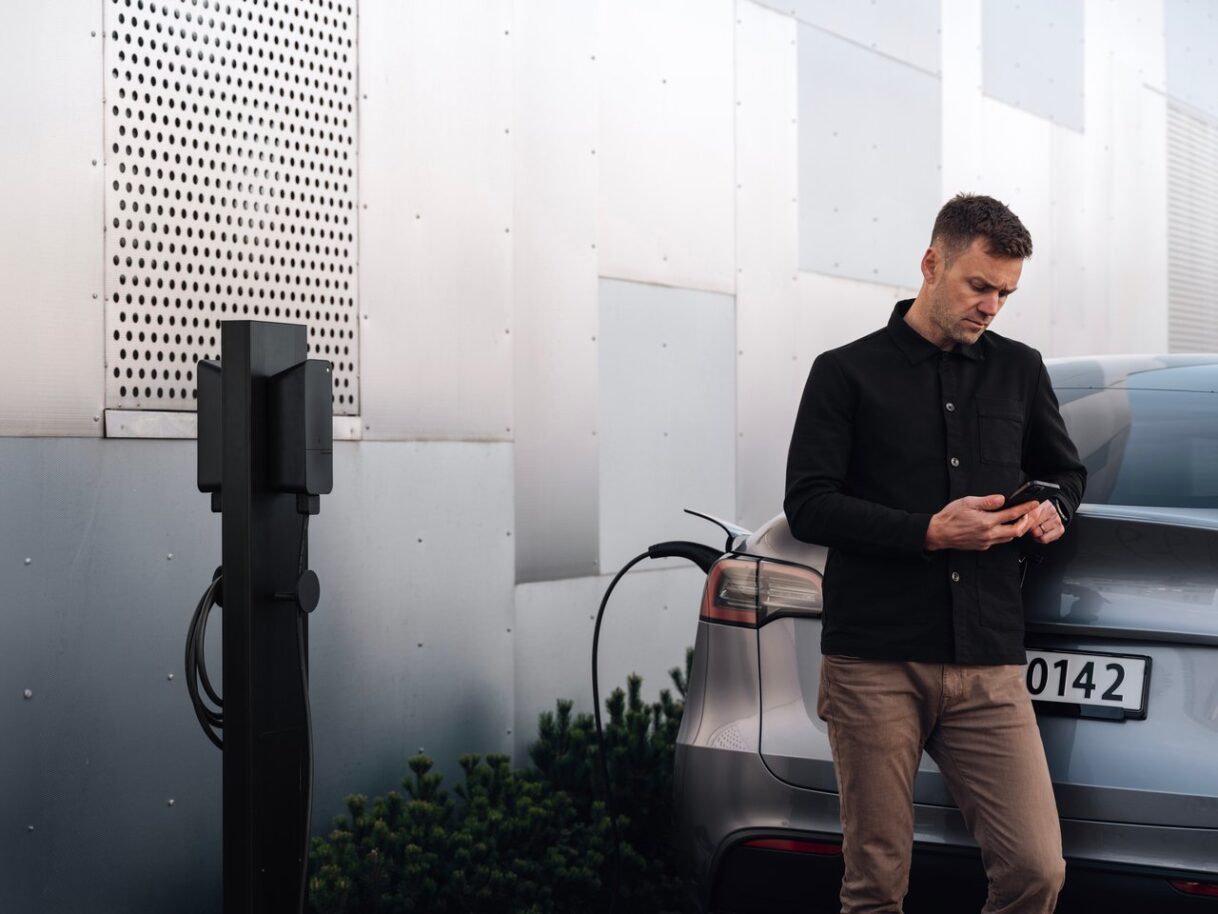
Most of the time, most cars are not moving, and can recharge. They are also parked overnight, from midnight until the early birds wake and drive to work. In countries where the electricity price follows grid demand, such as Norway, those are also the cheapest hours.
Overnight charging: slower, cheaper, easier on the grid
So why do so few people charge slowly and regularly at night? Most modern EVs let you set a start time in seconds, and many electricity providers now offer the same through their apps.
It is natural to want the peace of mind of a full battery in the morning, for the car as much as the phone. So what happens if you charge at 7.4 kW every night, from midnight until 6 am?
- After two hours: 14.8 kWh, about 74 km of range.
- After four hours: 29.6 kWh, about 148 km of range.
- After six hours: 44.4 kWh, about 222 km of range.
It does not take many hours, or many nights, for the car to recharge what you need for the next day, and then some. That full-battery feeling does not take long either, even when you are not charging as fast as possible.
Unlike your phone, an electric car on a dedicated charger can charge safely overnight. And since you draw little else at night, it is a tidy way to even out your consumption.
Many grids are under steady pressure from the growing number of electrical appliances, and charging at night is a good way to avoid adding to the strain on your local one.
*kWh is a unit of volume. A petrol car uses litres of fuel; an EV uses kWh of electricity.
**kW is a unit of speed. More kW fills the car faster, just as a petrol pump fills faster than a straw.
Related